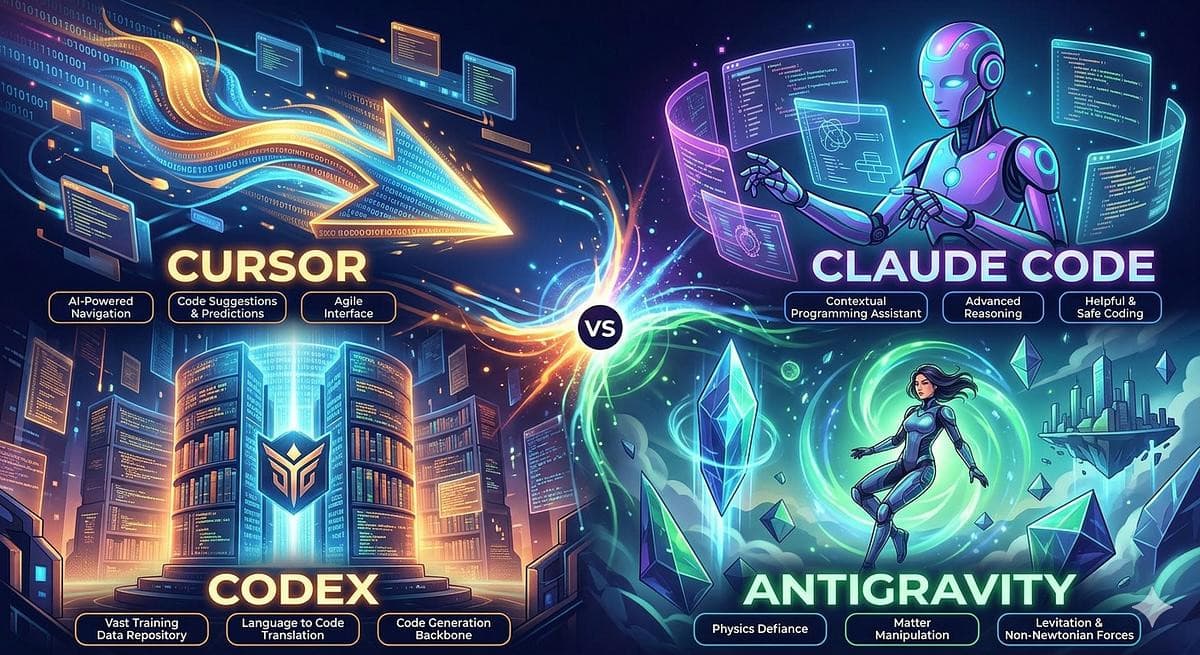
The New Era of Software Development
The software industry has changed dramatically over the past year.
Just a few years ago, developers spent hours writing boilerplate code, debugging simple issues, and searching Stack Overflow for solutions.
Today, AI tools can:
- Generate production-ready code
- Explain complex codebases
- Create API documentation
- Write unit tests
- Review pull requests
- Detect bugs
- Refactor applications
But here's the important part:
AI isn't replacing software engineers. It's changing how great engineers work.
The Rise of AI Coding Agents
Traditional AI assistants simply answered questions.
Modern AI agents actually perform work.
Instead of asking:
"How do I build authentication?"
Developers now ask:
"Build authentication using JWT, add refresh tokens, create database migrations, write tests, and update documentation."
The AI completes multiple steps automatically while the developer reviews the final implementation. This shift toward autonomous coding workflows is becoming one of the biggest trends in software engineering.
Model Context Protocol (MCP) Is Becoming the Standard
One of the biggest discussions on LinkedIn is Model Context Protocol (MCP).
MCP allows AI models to securely connect with tools like:
- GitHub
- Databases
- Slack
- File systems
- APIs
- Internal company services
Instead of only generating text, AI can interact with real applications and complete meaningful tasks. Many developers describe MCP as the "USB-C for AI tools" because it provides a common way for AI systems to access external resources.
Skills That Matter More Than Ever
The most valuable developers are no longer those who write every line manually.
They are the ones who can:
- Design scalable architectures
- Review AI-generated code
- Build secure systems
- Understand business requirements
- Solve complex engineering problems
- Integrate AI into development workflows
Coding remains important—but engineering thinking has become even more valuable.
AI Doesn't Remove the Need for Good Developers
AI can generate code quickly.
It cannot fully understand:
- Business logic
- Product vision
- Security trade-offs
- Scalability decisions
- System architecture
- Long-term maintainability
These responsibilities still belong to experienced engineers.
What Developers Should Learn in 2026
If you're planning your learning roadmap, focus on:
- Agentic AI
- Model Context Protocol (MCP)
- Retrieval-Augmented Generation (RAG)
- Cloud Platforms (AWS, Azure, GCP)
- System Design
- Docker & Kubernetes
- CI/CD
- Security Best Practices
- AI-assisted Development
These skills are increasingly appearing in discussions about the future of engineering roles and AI-native software development.
Final Thoughts
Software engineering isn't disappearing.
It's evolving.
The best developers will not be those who compete with AI.
They'll be the ones who know when to trust AI, when to verify its output, and how to combine human judgment with machine speed.
The future belongs to engineers who continuously learn, adapt, and embrace AI as a productivity partner—not as a threat.
Conclusion
AI is changing how software is built, but it isn't replacing the need for skilled engineers. Developers who understand architecture, security, cloud technologies, and AI workflows will remain highly valuable in the years ahead.
The question is no longer:
"Will AI replace developers?"
The better question is:
"Are you learning to work effectively with AI?"