The Ultimate AI Research & Coding Agent Handbook: How to Get Deep, Proactive Results with ChatGPT, Codex, Claude Code & Google Antigravity
1. Introduction: How to Turn AI from an Answer Machine into a Research Partner
In 2026, the most powerful use of AI is not simply asking it to “write code” or “explain this topic.” Real productivity comes from using AI as a structured research and execution system.
In a weak workflow, a developer asks AI one question, copies the answer, and manually asks the next question. In a stronger workflow, AI first decomposes the problem, collects relevant evidence, identifies contradictory information, lists assumptions, compares possible solutions, creates an implementation plan, inspects the codebase, runs tests, and produces an evidence-backed result.
This approach can be described as an agentic research workflow: the human defines the goal, AI performs investigation and execution, and the human retains control over important decisions and verification.
Core Principle: Do not simply tell AI to “give me an answer.” Tell it to “investigate the problem, collect evidence, compare alternatives, identify gaps, and produce an actionable result.”
Real-World Developer Scenario
Suppose you need to change the authorization architecture in a FinCore ERP backend. If you only ask, “How should we use Cognito and AVP?”, you may receive a generic explanation. But if you give AI the architecture, existing Prisma schema, current roles, organization mapping, security requirements, failure cases, and official AWS documentation, it can produce an architecture research report that separates assumptions, risks, alternatives, and implementation steps.
AI Usage
ChatGPT Deep Research can plan complex, multi-step questions, collect evidence from web sources, and produce structured reports with citations. A strong research prompt should clearly specify the desired outcome, scope, timeframe, constraints, and output structure.
Common Mistakes
- Giving an overly broad prompt.
- Not specifying source quality.
- Treating the first AI answer as the final answer.
- Not asking AI to search for contradictory evidence.
- Mixing research and implementation without verification.
Best Practices
Convert every important research task into a Question → Scope → Source Strategy → Investigation → Verification → Synthesis → Action Plan pipeline.
2. The Real Structure of a Research Prompt: From “What” to “How”
The quality of deep research often depends more on prompt architecture than on the model itself. A professional research prompt contains more than a topic; it defines the objective, context, constraints, evidence requirements, and expected deliverable.
Prompt PartWhat to DefineExampleGoalWhat exactly needs to be discovered?Evaluate a multi-tenant authorization architectureContextWhat is the existing system?NestJS + Prisma + PostgreSQL + Cognito + AVPScopeWhat is the research scope?AWS official docs + security guidance + architecture patternsEvidenceWhat types of sources are acceptable?Official docs first, reputable engineering sources secondCounter-checkWhat evidence challenges the conclusion?Known limitations, failure modes and alternativesOutputWhat should the final result look like?Findings + comparison + decision matrix + implementation plan
Pro Prompt Pattern
Write the research request as an explicit instruction:
“Investigate X for Y purpose. Break the problem into sub-questions. Prioritize primary sources. Verify important claims using multiple independent sources. Identify contradictions and unknowns. Separate established facts from inference. End with an actionable implementation plan and a list of assumptions that require my confirmation.”
Real-World Business Scenario
Suppose you need to select a payment provider. A weak prompt would be:
“Stripe vs Razorpay which is better?”
A stronger prompt would be:
“For an Indian SaaS application with recurring subscriptions, compare supported payment flows, recurring billing capabilities, webhooks, refunds, settlement considerations, developer APIs, failure handling, documentation quality and integration complexity. Use official documentation first, state date-sensitive limitations, and provide evidence for every material claim.”
AI Usage
Use research tools to first build a research outline, define the source strategy, and establish evaluation criteria before collecting conclusions.
3. Deep Research vs Normal Chat vs Coding Agents
Using the same AI surface for every problem is inefficient. Research, reasoning, and execution are different phases.
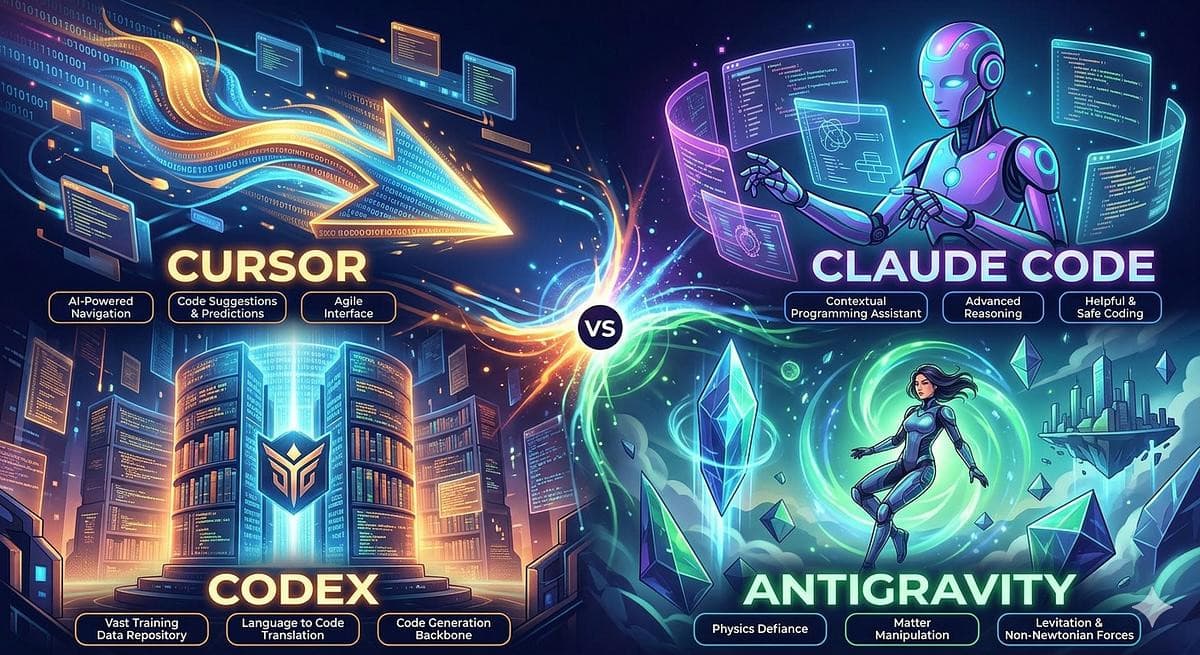
Tool TypeBest UseTypical OutputChat / SearchQuick orientation and current factsShort answer with sourcesDeep ResearchMulti-source investigationStructured evidence-backed reportCodexEngineering executionCode, tests, refactors, reviews and implementation workClaude CodeTerminal-based codebase investigation and executionCode changes, debugging, automation and analysisAntigravityAgent-first multi-step development and researchPlans, artifacts, browser actions, code and parallel agent work
Deep Research is designed for complex external investigation and evidence synthesis, while coding agents are designed to work directly with repositories, files, terminals, tests, and implementation workflows.
The important idea is not to ask one AI tool to perform every task. Instead, use the tool that matches the current phase of the problem.
Best Practices
Investigating the research question first, reviewing the findings as a human, and then executing the implementation through a coding agent is often cleaner than asking one agent to do everything at once.
4. How to Use ChatGPT Deep Research Like a Pro-Level Researcher
Deep Research is most useful when a question requires multiple sources and the information is scattered across them. It can gather, evaluate, and synthesize information into a structured research report.
Step 1: Define the Research Objective
“Research AI coding agents” is too broad.
Define it more precisely:
“Compare the current capabilities of Codex, Claude Code and Google Antigravity for a backend developer working on large TypeScript/NestJS repositories, focusing on codebase understanding, web research, subagents, MCP, testing, automation and long-running tasks.”
Step 2: Set a Source Hierarchy
- Official product documentation.
- Official engineering blogs and release notes.
- Technical specifications and security documents.
- Reputable engineering publications.
- Community discussions when real-world experience reports are relevant.
Step 3: Search for Contradictions
Do not only ask AI to “find evidence supporting X.”
Instead:
“Find evidence that supports and challenges each major conclusion. Highlight disagreements and explain whether they arise from different versions, environments, assumptions or genuinely conflicting evidence.”
Step 4: Make a Missing Information Section Mandatory
Strong research reports should contain a What We Still Don't Know section.
This prevents the AI from creating an artificial sense of certainty when the available evidence is incomplete.
Step 5: Audit the Sources
For important claims, open the underlying source and verify that the source actually supports the claim.
A citation by itself does not prove that the conclusion is correct.
5. How to Use Codex as an Engineering Research Agent
Codex can be used for large engineering tasks such as feature implementation, complex refactors, migrations, testing, code review and repository-level investigation.
Research-First Codex Prompt
“Do not modify code yet. First inspect the repository. Identify the relevant modules, database models, services, controllers, tests and configuration. Trace the current authorization flow end-to-end. Create a short architecture map. Identify inconsistencies and risks. Then propose two implementation approaches with tradeoffs. Wait for approval before making changes.”
Why This Works
This separates investigation from execution.
Instead of immediately changing files, the agent first builds a mental model of the repository. This reduces the chance of fixing the wrong layer of the system.
Second Phase: Implementation
Once the plan has been reviewed, allow the coding agent to implement the approved approach.
After implementation, run:
- Unit tests
- Integration tests
- Type checking
- Linting
- Build verification
- Relevant database migrations
- Security checks
Best Practices
Never judge an agent-generated change only by reading the diff. A change that looks correct can still fail because of integration behavior, database constraints, edge cases, configuration differences, or missing tests.
6. Claude Code: Research + Terminal Execution Workflow
Claude Code works directly from the terminal and can explore, edit, test, and automate work inside a project.
Powerful Pattern
Ask → Explore → Hypothesize → Verify → Change
- Clearly define the problem.
- Let the agent trace the relevant code.
- Ask it to list possible root causes.
- Test the hypotheses using logs, tests, database queries, and source code.
- Implement only after the root cause has been verified.
Example
Suppose an API occasionally returns incorrect authorization results.
Do not immediately say:
“Fix the authorization bug.”
Instead:
“Investigate why authorization decisions are inconsistent. Trace the request from authentication through role resolution, organization lookup, policy evaluation and database access. Identify at least three plausible causes. Use repository evidence and tests to eliminate incorrect hypotheses. Do not modify production logic until the root cause is confirmed.”
This turns the coding agent into an investigator rather than a blind code generator.
7. Google Antigravity: Agent-First Development
Agent-first development becomes especially interesting when the agent can work across multiple environments such as the editor, terminal, browser, and generated artifacts.
Where It Becomes Powerful
Imagine asking an agent to investigate a third-party API integration.
The workflow can potentially combine:
- Reading the existing repository
- Researching the provider documentation
- Checking API behavior
- Inspecting existing integration code
- Creating an implementation plan
- Changing the code
- Running tests
- Producing an artifact or report
The important concept is continuous context.
Instead of manually copying information from browser research into your IDE and then explaining the same context to a coding agent, an agentic environment can connect different parts of the workflow.
8. Multi-Agent Research: Why Specialization Matters
Complex research does not always need one giant agent.
A better pattern is:
Specialization + Synthesis
AgentResponsibilityOutputResearcherExternal documentation and evidenceResearch findingsCode AnalystRepository investigationArchitecture mapSecurity ReviewerThreats and failure modesRisk reportCriticChallenge assumptionsContradictions and gapsPlannerCombine findingsImplementation plan
However, multi-agent orchestration should not be used simply because it sounds advanced. Simple tasks generally do not need multiple agents.
9. The Research Loop: One Prompt Is Not Enough
The biggest improvement in deep research often comes from treating the first AI output as an intermediate result rather than the final answer.
Use an iterative loop:
- Discovery: Identify the important questions.
- Evidence: Collect reliable sources.
- Contradiction: Search for evidence that challenges the current conclusion.
- Gap Analysis: Identify unanswered questions.
- Deep Dive: Investigate the highest-impact gaps.
- Synthesis: Combine verified findings.
- Execution: Convert the findings into an implementation or decision.
This approach is significantly more reliable than asking a single question and accepting the first response.
10. How to Make AI Proactive
Proactive AI does not mean giving AI uncontrolled autonomy.
It means giving the agent enough context and explicit success criteria to anticipate useful next steps.
For example, instead of:
“Analyze this architecture.”
Use:
“Analyze this architecture. Identify the current design, hidden dependencies, security risks, scalability bottlenecks, missing requirements and likely failure modes. Then propose the next three investigations that would reduce the most uncertainty. Do not implement anything yet.”
The prompt gives AI a process, not just a question.
11. MCP, Skills, Rules and Project Context
The advantage of modern coding agents is not just model intelligence; reusable context and tools are equally important.
MCP
MCP can connect an AI agent to external tools and data sources.
Depending on the environment, this can allow an agent to work with systems such as:
- Databases
- Documentation
- Issue trackers
- Git repositories
- Cloud services
- Internal APIs
Skills
A Skill can represent a repeatable workflow.
For example:
- Database migration review
- API security review
- Pull request review
- SEO research
- Production incident investigation
- Architecture analysis
Project Rules
Instead of pasting the same project instructions into every conversation, maintain reusable project-level instructions where the tool supports them.
12. Research Quality Control
AI-generated research should pass through a quality-control pipeline.
A good report should clearly distinguish:
- Facts
- Evidence
- Interpretations
- Assumptions
- Unknowns
- Recommendations or options
Verification Questions
Ask the AI:
- Which claims are directly supported by primary sources?
- Which claims are inferred?
- Which sources disagree?
- What information could be outdated?
- What assumptions are being made?
- What evidence would change the conclusion?
- What important information is still missing?
13. Converting Research into Actual Code
Research should not end with a report.
The final objective is often to convert research into an actionable implementation plan.
Research Output
- Problem definition
- Evidence
- Constraints
- Architecture options
- Risks
- Decision criteria
Implementation Output
- Affected modules
- Database changes
- API changes
- Code changes
- Tests
- Migration strategy
- Rollback strategy
The transition should be explicit:
Research → Decision → Implementation Plan → Code → Tests → Review
14. The Independent Reviewer Technique
One of the simplest ways to improve AI output is to introduce an independent critique phase.
After an agent creates an architecture proposal or implementation, send the result to another agent and ask:
“Review this proposal independently. Assume the original author may be wrong. Identify incorrect assumptions, missing edge cases, security risks, scalability problems, unnecessary complexity and evidence that does not support the conclusion.”
The purpose is not to generate another version of the same answer. The purpose is to challenge the existing answer.
This pattern is particularly useful for authentication, authorization, payments, database migrations, security-sensitive code and infrastructure changes.
15. Research Notes as a Reusable Knowledge Base
Good research should not disappear inside a one-time conversation.
Important outputs can be converted into reusable project artifacts:
- Research.md: Evidence and findings.
- Decision.md: Approved architecture decision.
- Risks.md: Known risks and mitigations.
- Architecture.md: System diagrams and flows.
- AGENTS.md: Permanent project rules where appropriate.
- Skills: Repeatable investigation or implementation workflows.
- Tests: Convert important assumptions into executable verification.
The advantage is that future agents do not need to reconstruct the entire historical context from scratch.
16. A Complete AI Research-to-Code Workflow
A professional workflow can be organized into the following pipeline:
- Human: Defines the business problem.
- Research Agent: Breaks the problem into sub-questions.
- Source Research: Collects primary and relevant secondary evidence.
- Critic: Identifies contradictions, gaps and unsupported assumptions.
- Human Review: Validates scope and important decisions.
- Code Agent: Inspects the existing repository.
- Planner: Converts research into an implementation plan.
- Implementer: Makes the approved changes.
- Tester: Runs tests and verification.
- Reviewer: Performs an independent code and architecture review.
- Human: Makes the final approval, merge and production decision.
This workflow turns AI into a research + execution multiplier rather than treating it as a replacement for human engineering judgment.
17. Ready-to-Use Master Research Prompt
Below is a reusable structure that can be adapted for ChatGPT Deep Research, Claude, Claude Code, Codex or other capable agents:
Act as a senior research and engineering investigator.
GOAL:
Investigate [PROBLEM] so that I can make an evidence-backed engineering decision.
CONTEXT:
- Product/system:
- Current architecture:
- Tech stack:
- Existing constraints:
- Business goal:
- Known problems:
RESEARCH SCOPE:
1. Break the problem into logical sub-questions.
2. Identify the most important unknowns.
3. Prioritize primary/official sources.
4. Use current information relevant to the requested timeframe.
5. Compare credible alternatives.
6. Search specifically for limitations, failure modes and contradictory evidence.
EVIDENCE RULES:
- Cite important factual claims.
- Distinguish facts from inference.
- Do not present assumptions as facts.
- Flag information that could not be verified.
- Explain when two sources disagree.
CODEBASE WORK:
- First inspect the repository.
- Do not modify code during the initial investigation.
- Trace the relevant flow end-to-end.
- Identify affected files, modules, database models, APIs and tests.
OUTPUT:
1. Executive summary
2. Research questions
3. Evidence and sources
4. Findings
5. Contradictions
6. Unknowns and gaps
7. Alternatives
8. Risks
9. Architecture implications
10. Implementation plan
11. Test/verification plan
12. Rollback considerations
13. Questions requiring human confirmation
IMPORTANT:
Do not optimize for a confident answer. Optimize for a verifiable answer.
If evidence is insufficient, say so explicitly.
Before implementation, wait for approval.
18. Common Mistakes That Destroy AI Research Quality
- One giant vague prompt: Large context without a clear objective creates noise.
- No source hierarchy: Random blogs can become the basis for important decisions.
- No contradiction search: AI can reinforce the first plausible explanation.
- No separation between research and implementation: The agent may start coding before understanding the real problem.
- No independent review: Incorrect assumptions can survive because the same context keeps reinforcing them.
- No verification command: “Looks correct” is not the same as passing tests.
- Too many agents: Parallelism can create unnecessary overhead and conflicting outputs.
- Permanent context without maintenance: Outdated rules can become harmful if the project changes.
- Ignoring permissions: Coding agents can execute commands and interact with files or external tools; access should be scoped appropriately.
Security Note
Agentic systems should operate with least-privilege access, explicit approval for high-impact actions and appropriate auditability. Coding agents that can execute commands, modify files, access repositories or interact with external systems should be given only the permissions they actually need.
19. Practical Daily Workflow for a Developer
A developer can build a repeatable daily workflow without turning every task into a huge research project.
TaskSuggested AI WorkflowQuick technical questionChat/Search → Verify official documentationNew technology evaluationDeep Research → Evidence matrix → Human decisionUnknown codebaseClaude Code/Codex → Architecture explorationComplex featureResearch → Plan → Coding agent → Tests → ReviewBug investigationAgent → Reproduce → Hypotheses → Evidence → Fix → Regression testLarge refactorCodebase map → Staged plan → Implementation → Independent reviewRepeated taskConvert successful workflow into Skill/rule/automation
20. Final Conclusion: The Best Results Come from Workflow, Not Just Prompts
The secret to getting deep, proactive, and reliable results from AI is not a magical prompt. The real advantage comes from a repeatable workflow.
Use AI in layers:
Research the problem → Verify the evidence → Understand the existing system → Create a plan → Execute in a controlled environment → Test the result → Challenge the assumptions → Preserve the useful knowledge.
ChatGPT Deep Research is useful for complex external investigation. Codex is useful for engineering execution, repository-level work, reusable Skills and parallel agent workflows. Claude Code is useful for terminal-first investigation, coding and automation workflows. Google Antigravity combines agent-first development with browser interaction, artifacts and multi-agent workflows.
Instead of treating these tools as a single “AI coder,” use them as components of a coordinated research-and-engineering system.
Key Takeaways
- Instruct AI to act like an investigator rather than an answer machine.
- Define the goal, scope, sources, verification requirements, and output format in the research prompt.
- Prioritize primary sources.
- Specifically search for contradictory evidence and missing information.
- Keep research and implementation in separate phases.
- Use Codex, Claude Code and Antigravity with repository context and reusable instructions.
- Divide complex work among specialized agents, but avoid unnecessary subagents.
- Use an independent reviewer to challenge major architecture and code changes.
- Convert research findings into implementation plans, tests and reusable documentation.
- Require human approval and verification for high-impact changes.
- Convert successful workflows into reusable Skills, rules, prompts or automation.
- Never treat AI confidence as a substitute for evidence.
21. Official Sources & Further Reading
- OpenAI Deep Research
- OpenAI Research with ChatGPT
- OpenAI Codex
- OpenAI Codex Safety
- Anthropic Claude Code Documentation
- Anthropic Claude Code CLI Reference
- Anthropic Prompting and Subagent Guidance
- Google Antigravity Documentation
- Google Antigravity Agent Documentation
- Google Antigravity 2.0